Page 1
s
PROBLEM-BASED
MEDICAL CASE
MANAGEMENT
SECONI" EDITION
Edited by Kathryn Tan
362.11068
P96
View original page (figures / layout)
Page 2
View original page (figures / layout)

Page 3
Problem-Based Medical Case
Management
Second Edition
Edited by Kathryn Tan
EEABHM
View original page (figures / layout)
Page 4
Hong Kong University Press
The University of Hong Kong
Pokfulam Road
Hong Kong
www.hkupress.org
© 2017 Department of Medicine, The University of Hong Kong
ISBN 978-988-8390-79-3 (Paperback)
All rights reserved. No portion of this publication may be reproduced or
transmitted in any form or by any means, electronic or mechanical, includ-
ing photocopy, recording, or any information storage or retrieval system,
without prior permission in writing from the publisher.
British Library Cataloguing-in-Publication Data
A catalogue record for this book is available from the British Library.
10987654321
Printed and bound by Paramount Printing Co., Ltd. in Hong Kong, China
View original page (figures / layout)
Page 5
Contents
(Books)
== AUG 2017
Chapter 142
BOOKS REGISTRATION ORDINANCE
Foreword by Sir David Todd
Foreword to the First Edition by Sir David Todd
Preface by Rosie Young and Kathryn Tan
CARDIOLOGY
Hung-Fat Tse
1. Cardiology—Short Cases
Chu-Pak Lau, A. John Camm, Hung-Fat Tse,
Kai-Hang Yiu, and Kathy Lai-Fun Lee
Overview
1.1 Aortic regurgitation
1.2 Aortic stenosis
1.3 Atrial septal defect
1.4 Eisenmenger’s syndrome
1.5 Atrial fibrillation
1.6 Mitral regurgitation
1.7 Mitral stenosis
1.8 Mitral valve prolapse
1.9 Patent ductus arteriosus
1.10 Tricuspid regurgitation
1.11 Ventricular septal defect
Examination case scenarios
Xiv
xVvi
xviii
View original page (figures / layout)
Page 6
vi Contents
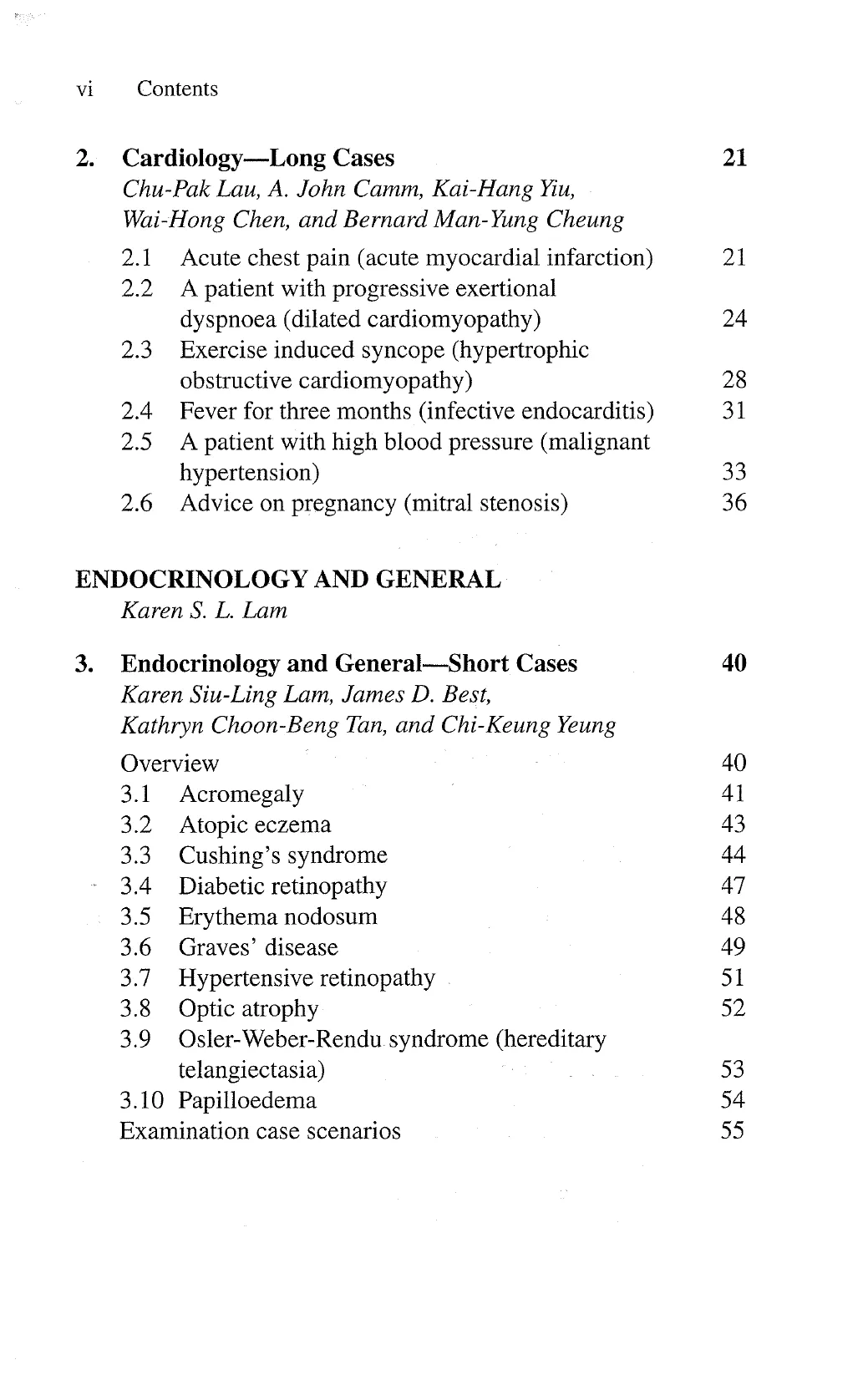
2. Cardiology—Long Cases
Chu-Pak Lau, A. John Camm, Kai-Hang Yiu,
Wai-Hong Chen, and Bernard Man-Yung Cheung
2.1
22
2.3
2.4
2.5
2.6
Acute chest pain (acute myocardial infarction)
A patient with progressive exertional
dyspnoea (dilated cardiomyopathy)
Exercise induced syncope (hypertrophic
obstructive cardiomyopathy)
Fever for three months (infective endocarditis)
A patient with high blood pressure (malignant
hypertension)
Advice on pregnancy (mitral stenosis)
ENDOCRINOLOGY AND GENERAL
Karen S. L. Lam
3. Endocrinology and General—Short Cases
Karen Siu-Ling Lam, James D. Best,
Kathryn Choon-Beng Tan, and Chi-Keung Yeung
Overview
3.1 Acromegaly
3.2 Atopic eczema
3.3 Cushing’s syndrome
3.4 Diabetic retinopathy
3.5 Erythema nodosum
3.6 Graves’ disease
3.7 Hypertensive retinopathy
3.8 Optic atrophy
3.9 Osler-Weber-Rendu syndrome (hereditary
telangiectasia)
3.10 Papilloedema
Examination case scenarios
21
21
24
28
31
33
36
40
40
41
43
44
47
48
49
51
52
53
54
55
View original page (figures / layout)
Page 7
Contents vii
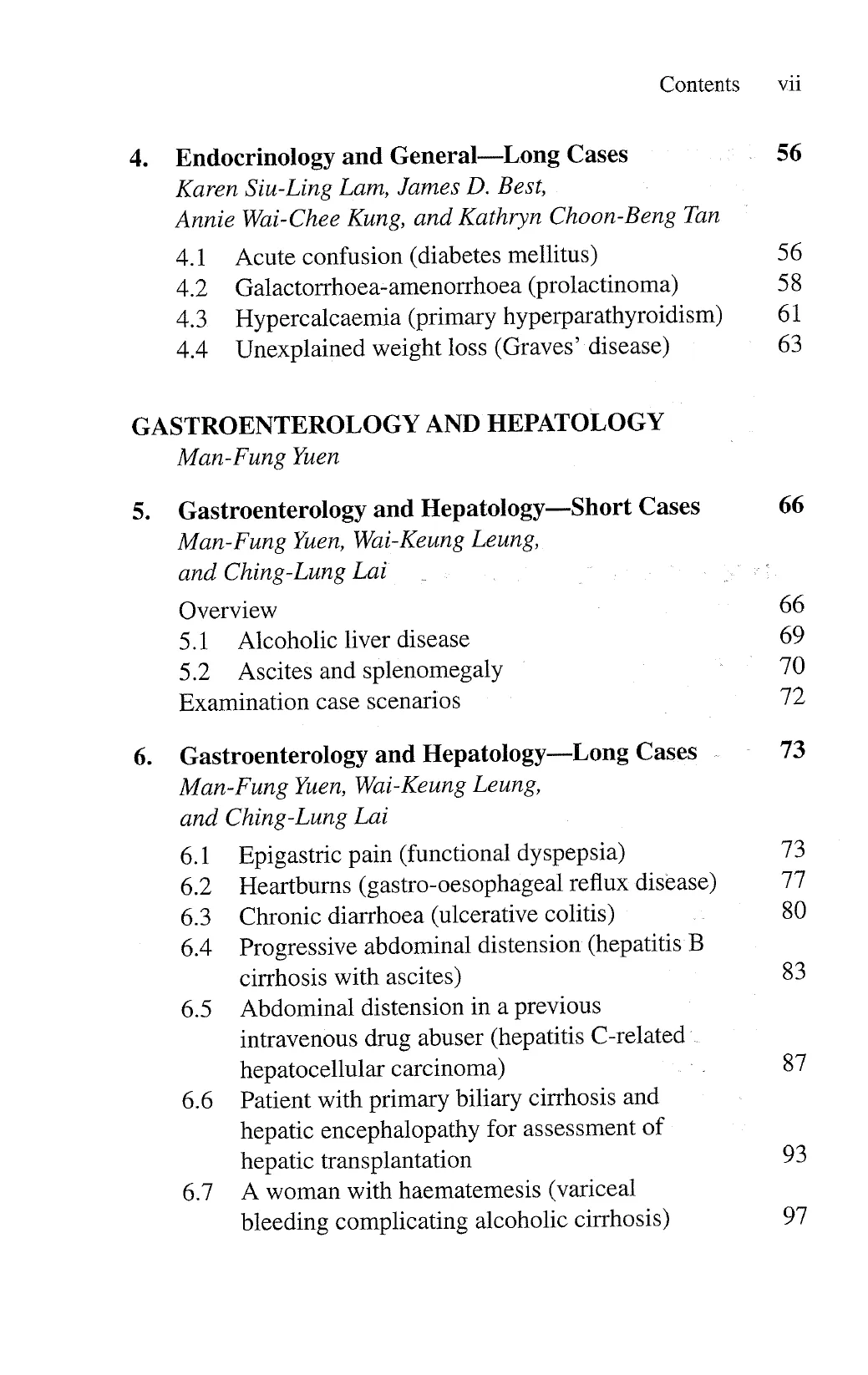
4. Endocrinology and General—Long Cases 56
Karen Siu-Ling Lam, James D. Best,
Annie Wai-Chee Kung, and Kathryn Choon-Beng Tan
4.1 Acute confusion (diabetes mellitus) 56
4.2 Galactorrhoea-amenorrhoea (prolactinoma) 58
4.3 Hypercalcaemia (primary hyperparathyroidism) 61
4.4 Unexplained weight loss (Graves’ disease) 63
GASTROENTEROLOGY AND HEPATOLOGY
Man-Fung Yuen
5. Gastroenterology and Hepatology—Short Cases 66
Man-Fung Yuen, Wai-Keung Leung,
and Ching-Lung Lai
Overview 66
5.1 Alcoholic liver disease 69
5.2 Ascites and splenomegaly : 70
Examination case scenarios 72
6. Gastroenterology and Hepatology—Long Cases 73
Man-Fung Yuen, Wai-Keung Leung,
and Ching-Lung Lai
6.1 Epigastric pain (functional dyspepsia) 73
6.2 Heartburns (gastro-oesophageal reflux disease) 71
6.3 Chronic diarrhoea (ulcerative colitis) 80
6.4 Progressive abdominal distension (hepatitis B
cirrhosis with ascites) 83
6.5 Abdominal distension in a previous
intravenous drug abuser (hepatitis C-related
hepatocellular carcinoma) 87
6.6 Patient with primary biliary cirthosis and
hepatic encephalopathy for assessment of
hepatic transplantation 93
6.7 A woman with haematemesis (variceal
bleeding complicating alcoholic cirrhosis) 97
View original page (figures / layout)
Page 8
viii ~ Contents
HAEMATOLOGY
Eric Tse
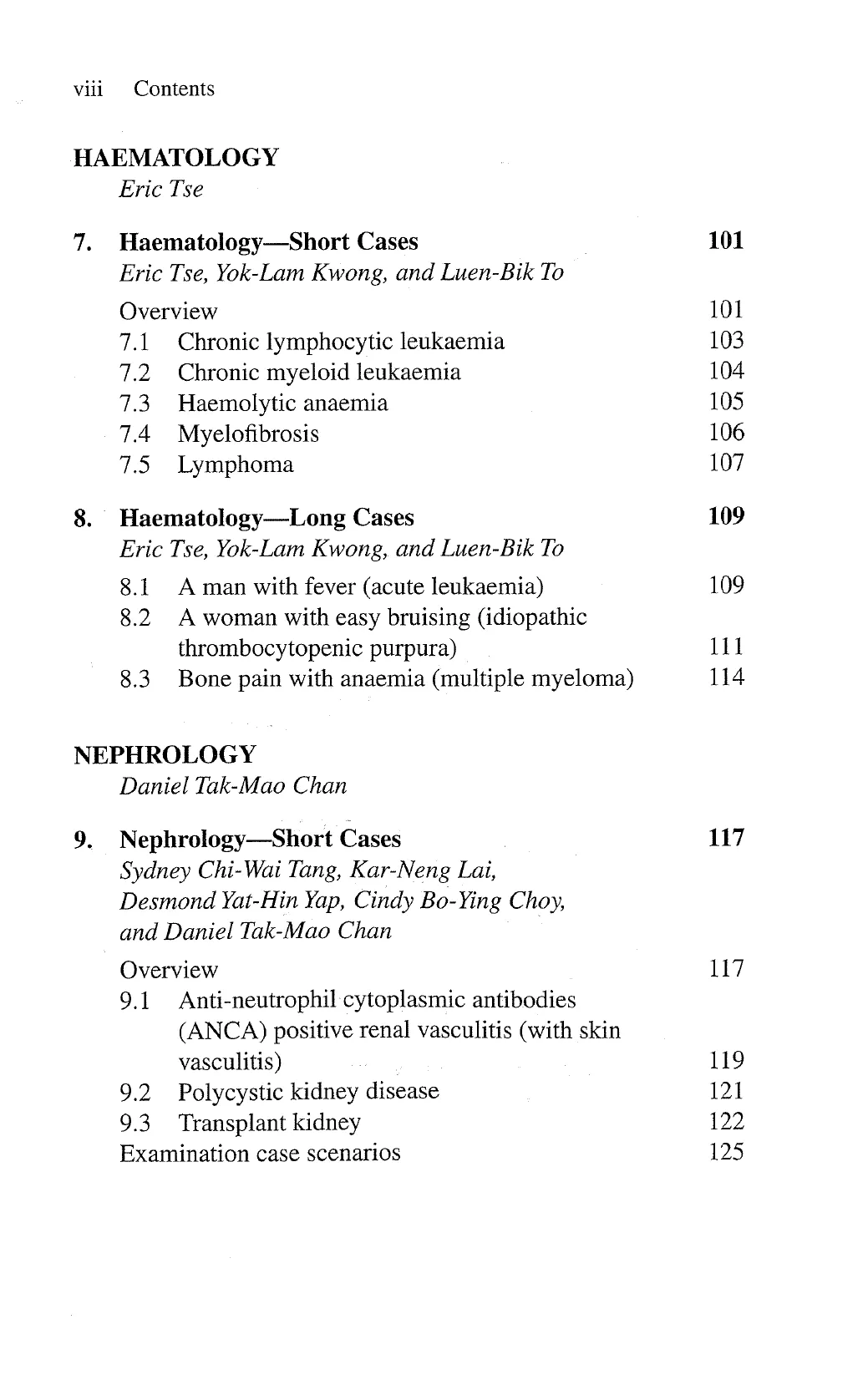
7. Haematology—Short Cases
Eric Tse, Yok-Lam Kwong, and Luen-Bik To
Overview
7.1 Chronic lymphocytic leukaemia
7.2 Chronic myeloid leukaemia
7.3 Haemolytic anaemia
7.4 Myelofibrosis
7.5 Lymphoma
8. Haematology—ILong Cases
Eric Tse, Yok-Lam Kwong, and Luen-Bik To
8.1 A man with fever (acute leukaemia)
8.2 A woman with easy bruising (idiopathic
thrombocytopenic purpura)
8.3 Bone pain with anaemia (multiple myeloma)
NEPHROLOGY
Daniel Tak-Mao Chan
9. Nephrology—Short Cases
Sydney Chi-Wai Tang, Kar-Neng Lai,
Desmond Yat-Hin Yap, Cindy Bo-Ying Choy,
and Daniel Tak-Mao Chan
Overview
9.1 Anti-neutrophil cytoplasmic antibodies
(ANCA) positive renal vasculitis (with skin
vasculitis)
9.2 Polycystic kidney disease
9.3 Transplant kidney
Examination case scenarios
101
101
103
104
105
106
107
109
109
111
114
117
117
119
121
122
125
View original page (figures / layout)
Page 9
Contents
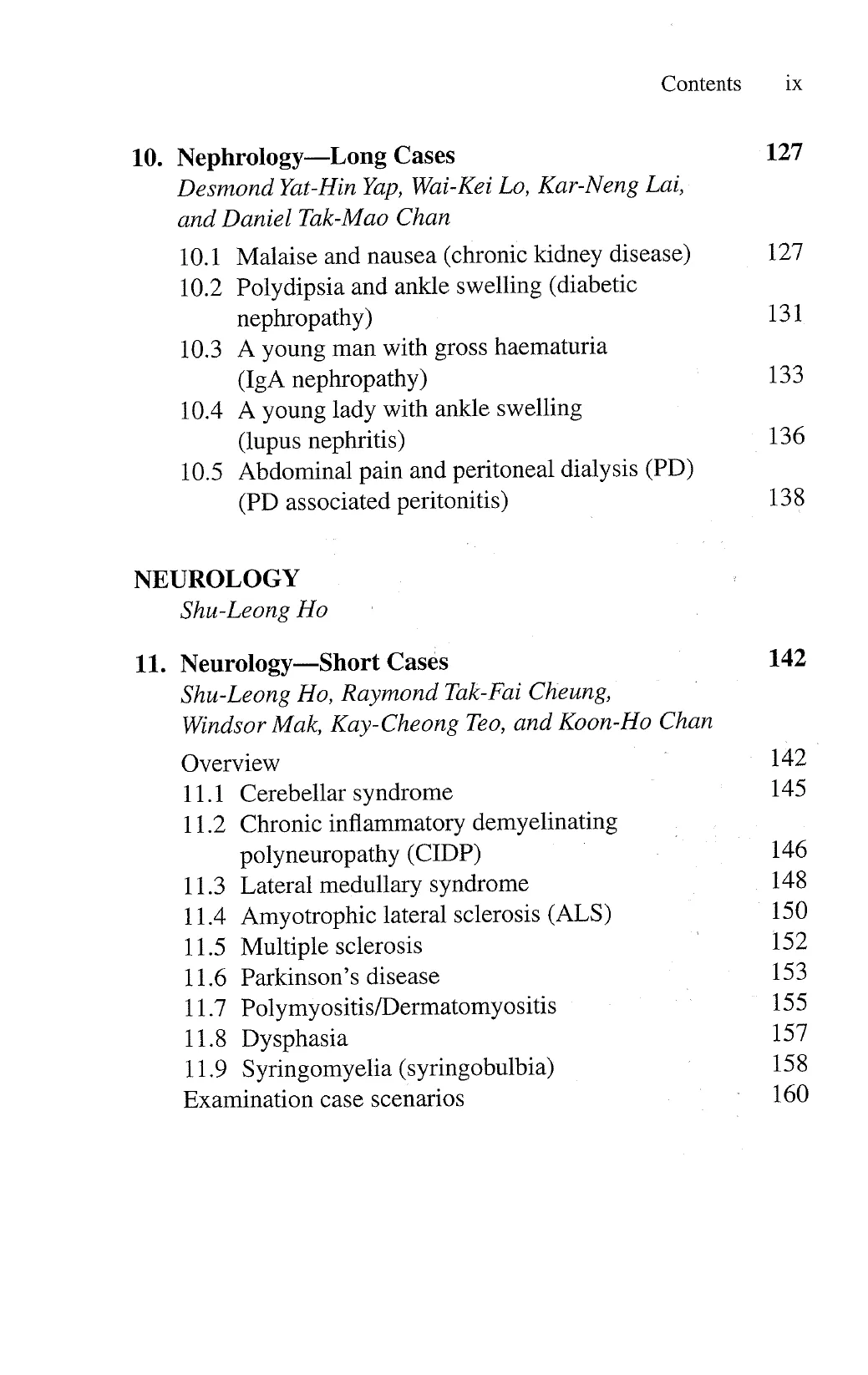
10. Nephrology—Long Cases
Desmond Yat-Hin Yap, Wai-Kei Lo, Kar-Neng Lai,
and Daniel Tak-Mao Chan
10.1 Malaise and nausea (chronic kidney disease)
10.2 Polydipsia and ankle swelling (diabetic
nephropathy)
10.3 A young man with gross haematuria
(IgA nephropathy)
10.4 A young lady with ankle swelling
(lupus nephritis)
10.5 Abdominal pain and peritoneal dialysis (PD)
(PD associated peritonitis)
NEUROLOGY
11.
Shu-Leong Ho
Neurology—Short Cases
Shu-Leong Ho, Raymond Tak-Fai Cheung,
Windsor Mak, Kay-Cheong Teo, and Koon-Ho Chan
Overview
11.1 Cerebellar syndrome
11.2 Chronic inflammatory demyelinating
polyneuropathy (CIDP)
11.3 Lateral medullary syndrome
11.4 Amyotrophic lateral sclerosis (ALS)
11.5 Multiple sclerosis
11.6 Parkinson’s disease
11.7 Polymyositis/Dermatomyositis
11.8 Dysphasia
11.9 Syringomyelia (syringobulbia)
Examination case scenarios
ix
127
127
131
133
136
138
142
142
145
146
148
150
152
153
155
157
158
160
View original page (figures / layout)
Page 10
X
12.
Contents
Neurology—Long Cases
Raymond Tak-Fai Cheung, Shu-Leong Ho,
Windsor Mak, and Koon-Ho Chan
12.1 Confused speech (embolic stroke due to
rheumatic mitral valve disease and atrial
fibrillation)
12.2 Epilepsy with poor seizure control
12.3 Diplopia on reading (myasthenia gravis with
thyrotoxicosis)
12.4 Tuberculous meningitis complicated by stroke
RESPIRATORY MEDICINE
13.
14.
Mary Sau-Man Ip and Gary Lee
Respiratory Medicine—Short Cases
David Chi-Leung Lam, James Chung-Man Ho,
and Mary Sau-Man Ip
Overview
13.1 Bronchiectasis
13.2 Chronic obstructive pulmonary disease (COPD)
13.3 Collapsed lung
13.4 Pleural effusion
13.5 Upper lobe/apical fibrosis
Examination case scenarios
Respiratory Medicine—Long Cases
James Chung-Man Ho, Christopher Kim-Ming Hui,
David Chi-Leung Lam, Kenneth Wah-Tak Tsang,
Wah-Kit Lam, and Mary Sau-Man Ip
14.1 Persistent cough with dyspnoea (asthma)
14.2 Recurrent haemoptysis (bronchiectasis)
14.3 Chronic cough and weight loss (carcinoma
of lung)
14.4 Breathing difficulty during sleep (obstructive
sleep apnoea)
14.5 Progressive dyspnoea (pleural effusion)
164
164
167
171
174
178
178
180
183
185
187
190
191
195
195
197
201
204
208
View original page (figures / layout)
Page 11
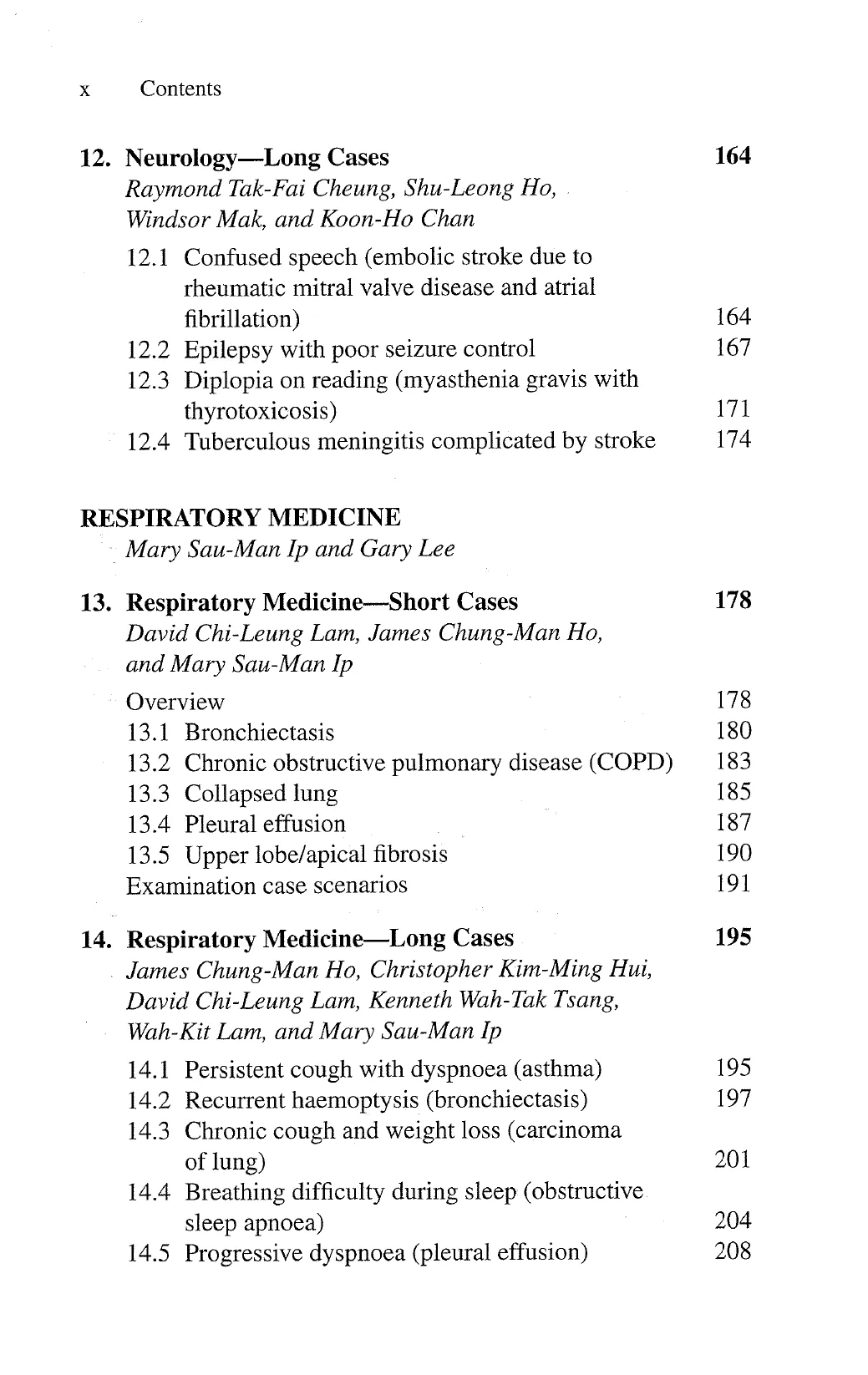
Contents
14.6 Progressive dyspnoea and cough—idiopathic
pulmonary fibrosis (IPF)
14.7 A lung cancer patient with sudden dyspnoea
(pulmonary thromboembolism as a
complication in lung neoplasm)
RHEUMATOLOGY
Chak-Sing Lau
15. Rheumatology—Short Cases
Chak-Sing Lau, Carman Ho, Temy Mo-Yin Mok,
and Raymond Woon-Sing Wong
Overview
15.1 Dermatomyositis
15.2 Gout
15.3 Nodal osteoarthritis
15.4 Psoriatic arthritis
15.5 Scleroderma
15.6 Sjogren’s syndrome
Examination case scenarios
16. Rheumatology—Long Cases
Chak-Sing Lau, Carmen Ho, Temy Mo-Yin Mok,
and Raymond Woon-Sing Wong
16.1 Back pain for two years (ankylosing spondylitis)
16.2 A woman with multiple problems (systemic
lupus erythematous)
16.3 Recurrent right shoulder pain (theumatoid
arthritis)
MEDICAL ETHICS AND COMMUNICATION
Cyrus Rustam Kumana and Rosie Tse-Tse Young
17. Medical Ethics and Communication
Overview
17.1 A patient with haemorrhagic stroke
xi
211
215
219
219
221
224
227
228
230
233
234
237
237
240
243
247
247
249
View original page (figures / layout)
Page 12
xii
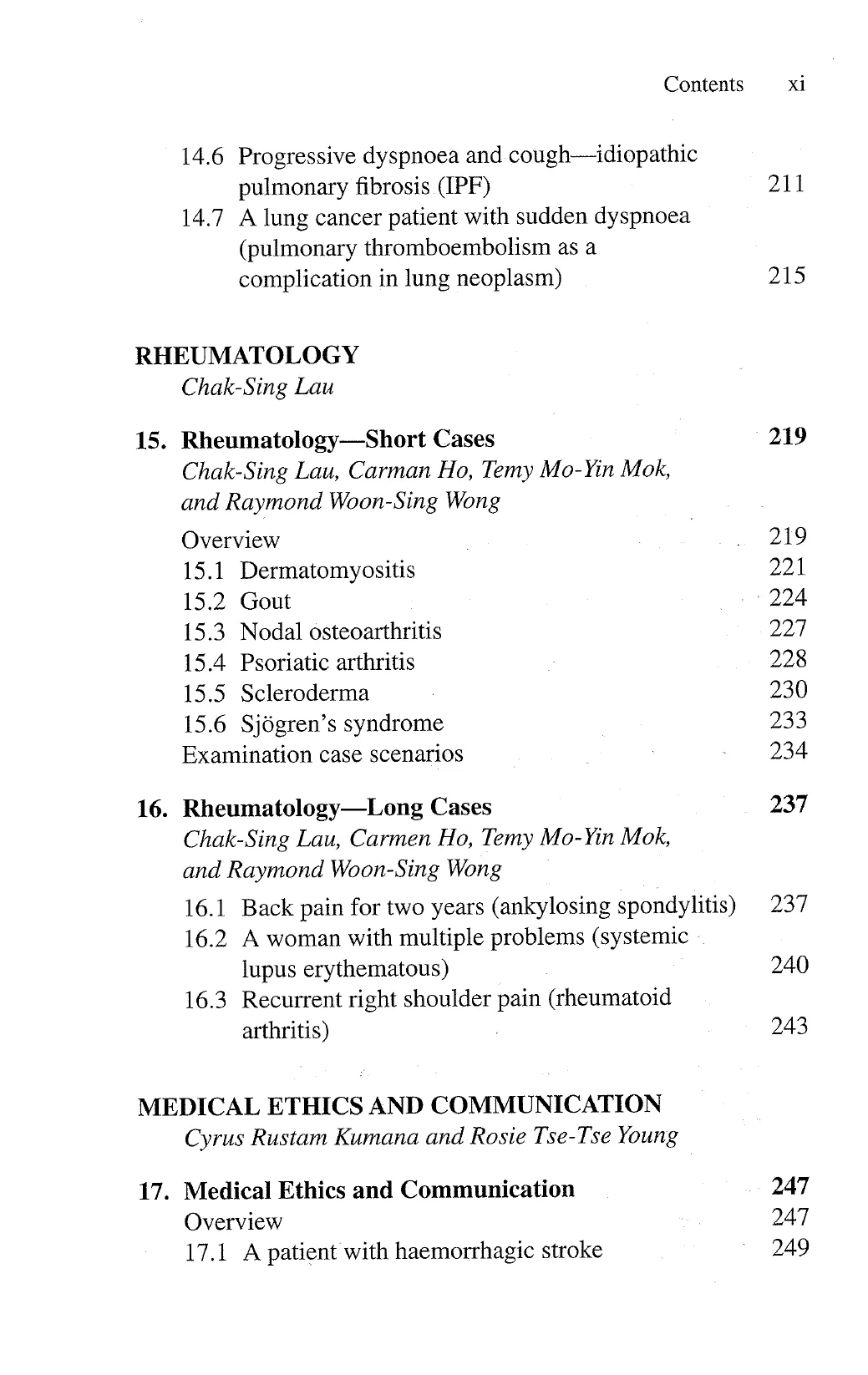
Contents
17.2 A lorry driver with epilepsy
17.3 Terminal cancer of the pancreas
17.4 Consent for drug trial
17.5 Emerging controversies
Further reading
PROFESSIONALISM
18.
Joseph Kwan
Medical Professionalism
Joseph Kwan and Julie Chen
Introduction
18.1 Case study 1: Being open and honest when
something goes wrong
18.2 Case study 2: Improper disclosure on social
media
18.3 Case study 3: Maintaining a professional
boundary
18.4 Case study 4: Conflict of interest
18.5 Case study 5: Self-prescription
Conclusion
References
IMAGES
19.
20.
Respiratory Diagnostics
David Chi-Leung Lam, Christopher Kim-Ming Hui,
Jamie Chung-Mei Lam, Julie Kwan-Ling Wang,
and Macy Mei-Sze Lui
19.1 CXRs and CT thorax images
19.2 Lung function tests
19.3 Sleep case studies with polysomnograms
Electrocardiogram
Hung-Fat Tse
250
251
253
255
258
259
259
261
262
263
265
266
267
267
269
269
285
289
295
View original page (figures / layout)
Page 13
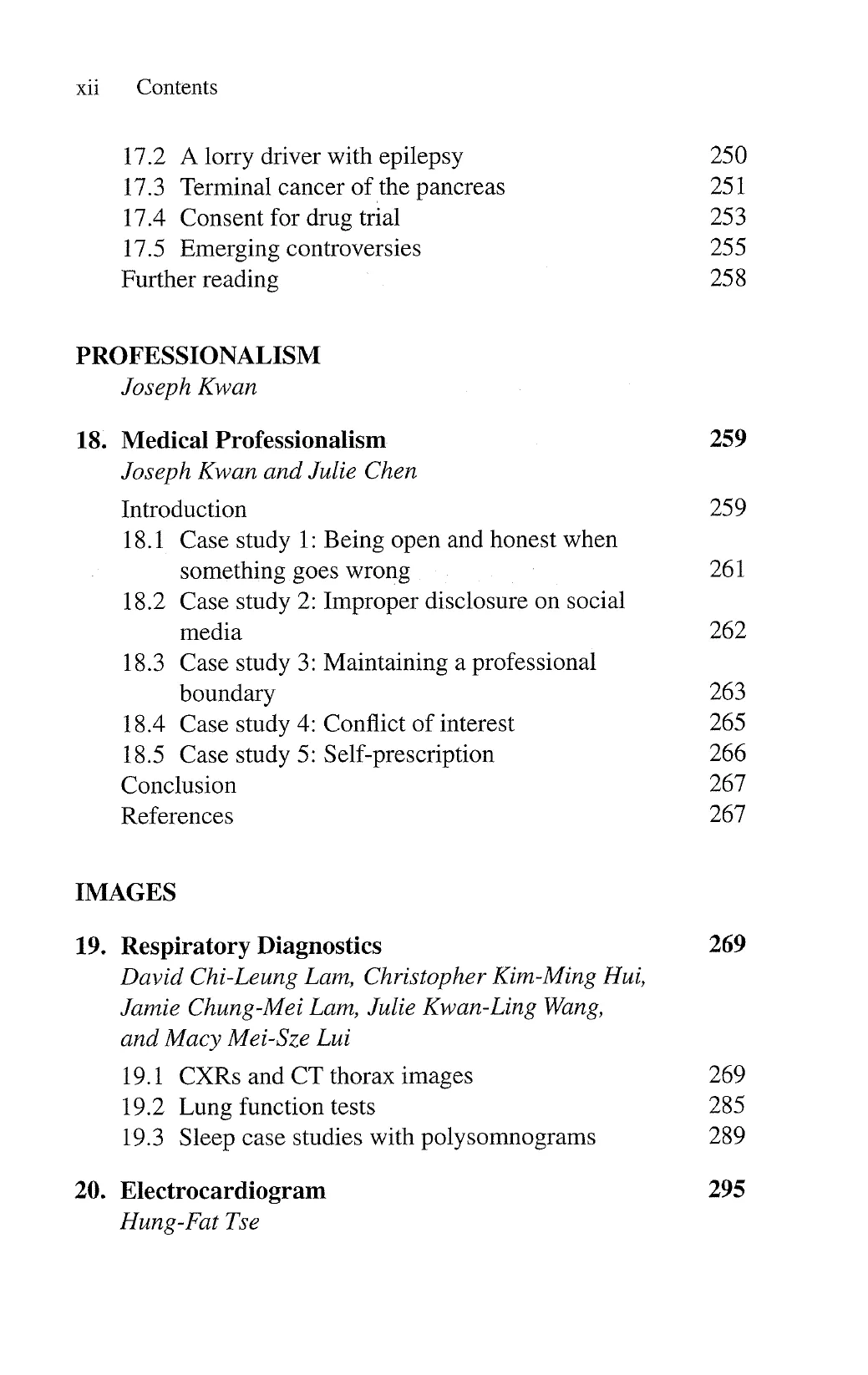
Contents
21. Fundi
Nelson Ming-Sun Wat
22. Skin
Johnny Chun-Yin Chan, Chi-Keung Yeung,
and Henry Hin-Lee Chan
23. Neural Images
Raymond Tak-Fai Cheung
24. Plain X-ray Images
Chi-Ho Lee and Chak-Sing Lau
Appendix:
Guidelines on Do Not Attempt CPR Decisions
Cyrus Rustam Kumana
List of Contributors
Index
Xiii
317
328
353
376
391
400
410
View original page (figures / layout)
Page 14
Foreword
It is a pleasure to welcome the second edition of this special book.
My comments in the foreword to the first edition apply equally
here. While the contents and layout are similar, certain sections
have undergone modification, and diagnostic approaches and
treatment modalities have been brought up to date, in keeping
with advances in medical science. There are several new authors,
mostly young—it is pleasing to note.
In the sections with advice to the patient, the word “prevention”
often appears. The preventive aspect of patient management cannot
be over emphasized. Not only can the recurrence of the illness in
question be avoided, many current diseases such as those related to
lifestyle, including malignancies, are essentially preventable. The
physician is well placed to impress this upon patients and their
families.
The chapter on medical professionalism has been well rewrit-
ten. But as previously pointed out, the teaching of professionalism
is not easy. How does one instruct another to be compassionate?
The illustrative examples given underscore the fact that the acqui-
sition of professionalism comes with experience—the experience
of life. It would be well for us to remember that learning from role
models is time-honoured and effective.
View original page (figures / layout)
Page 15
Foreword xv
The authors are to be congratulated on their ingenuity and
scholarship. This book should be of value not only to those prepar-
ing for examinations but as a regular reference for all. It is not a
replacement for the standard textbook, but is a most useful and
unique problem-based guide to diagnosis and patient management.
Sir David Todd
Emeritus and Honorary Professor
Department of Medicine
University of Hong Kong
View original page (figures / layout)
Page 16
Foreword to the First Edition
There is a truism in medicine that diagnosis must precede treat-
ment. How a diagnosis is arrived at depends on knowledge, experi-
ence, judgement, and selected investigations. In many instances
only a so-called differential diagnosis can be made. The severity of
the illness and urgency to initiate treatment sometimes call for the
most likely diagnosis or working diagnosis. The problem-based
approach is consistent with this perception of diagnosis and treat-
ment and provides a logical and rewarding methodology for the
management of patients.
In this book, the authors—all physicians with considerable
knowledge and experience—clearly describe a problem-based
approach to the management of common diseases. This has been
expertly and successfully achieved. There are illustrative long and
short cases preceded by an overview of the relevant subspecialty;
the questions being posed and the pitfalls that are mentioned are
very useful. The inclusion of images and clinical laboratory results
is an additional asset. The contents are orientated towards degree
or professional examinations. While the psychological and social
aspects of the patient, so important in history taking and patient
management, are beyond the scope of this book, they should not
be forgotten. After all, clinical medicine is an art as well as a
science. To some extent at least the chapters on medical ethics and
comumunication, and on professionalism, compensate for this. The
practical guidelines on in-hospital resuscitation decisions help to
clarify an often confusing topic.
View original page (figures / layout)
Page 17
Foreword to the First Edition ~ xvii
Undergraduates and physicians at all stages of their career will
find this book illuminating and helpful. It provides a source of
concise information and is well designed for rapid revision, for
both examiners and candidates. The authors are to be congratulated
on their unique and useful contribution to this relatively neglected
area of the medical literature.
Sir David Todd
Emeritus and Honorary Professor
Department of Medicine
The University of Hong Kong
View original page (figures / layout)
Page 18
Preface
The essence of a medical textbook is to transfer knowledge and
improve clinical care. This book does not aim to be comprehensive.
It is intended primarily to provide a compact aid for medical stu-
dents and to help them in the preparation of examination in general
medicine. The format of the book is problem-based, in line with
the problem-based approach adopted by many medical schools
worldwide. A broad range of common medical cases is covered.
Clinical aspects, differential diagnoses, appropriate investiga-
tions, and management of relevant cases in each subspecialty are
presented, with particular emphasis on the applicability to exami-
nation settings.
Medicine is an ever changing science. Since the publication of
the first edition in 2006, there have been major advances in many
aspects of medicine, and new information has become available.
In the swift current of scientific progress, diagnosis and disease
management in many areas of clinical practice have changed.
Innovations in technology have led to improvement in our diag-
nostic tools, and novel therapeutic agents have been developed and
incorporated into treatment algorithm. Hence, in this new edition,
all the cases have been revised to keep the material up-to-date.
New topics have also been added. Emerging controversies in
medical ethics and how to uphold the standards of professional
conduct in this era are also covered. Since we have tried to provide
sufficient detail in the text to help in the diagnosis and treatment
of common medical conditions, we hope this book will also prove
View original page (figures / layout)
Page 19
Preface xix
useful to our junior doctors in their day-to-day practice and help
them to refresh their memories of the diagnostic possibilities in the
cases they encounter. It should also be helpful in their preparation
of case presentation.
We hope this new edition will serve the needs of our readers
and will be worthy of their frequent use. We thank the many con-
tributors who have poured their knowledge into this volume, and
any suggestions for improvement will be warmly welcomed and
carefully considered.
Rosie Young and Kathryn Tan
Department of Medicine
University of Hong Kong
2016
View original page (figures / layout)
Page 20
View original page (figures / layout)